

Human Verification Systems Are Still Effective Against Automated Bots
These systems also keep track of known bot signatures and IP reputations. When an agent tries to get to a protected resource it has to pass a test of its headers, TLS fingerprints and browser environment. If the agent cannot provide a browser history or exhibits patterns that look artificial it is forced into a harder challenge, which is where the artificial intelligence often fails.
Technical Challenges for Intelligent Software
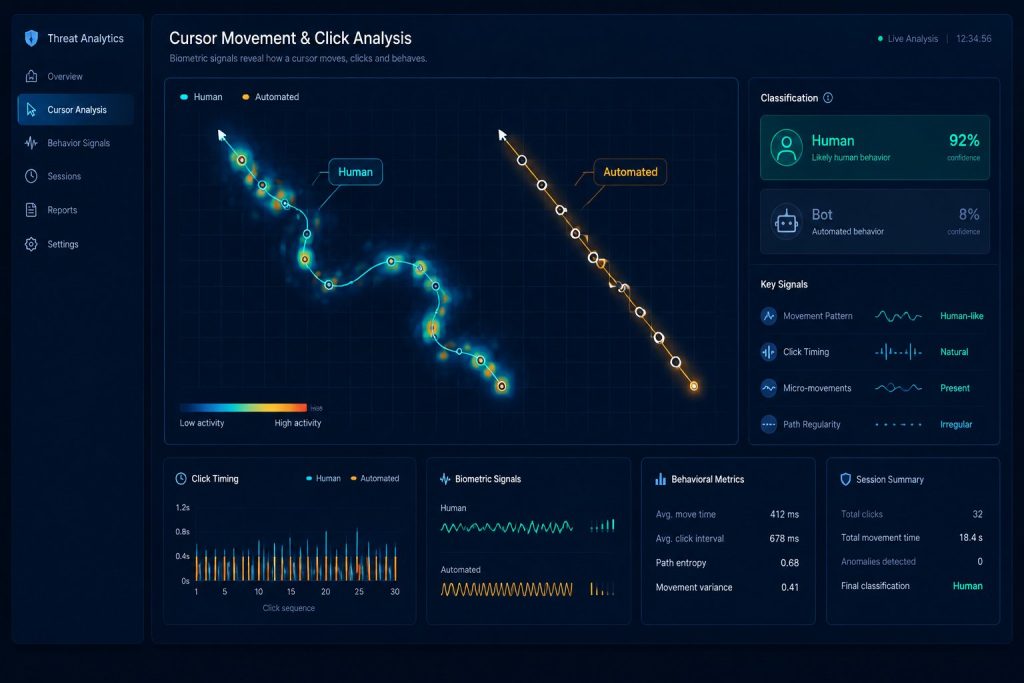
Creating a bot that can pass modern security tests is very hard. The agent has to be able to process information and act like a human. Developers are working on browsers that can mimic human characteristics but these are often stopped by server-side detection logic. For example consider the following simple logic check that many backend security APIs use:
function verifyHumanBehavior(sessionData) {
    const { mouseTrajectory, keystrokeFrequency } = sessionData;

    // Check for non-human acceleration
    if (isPerfectGeometricPath(mouseTrajectory)) {
        return { authorized: false reason: 'Non-human movement' };
    }

    // Check for timing consistency
    if (hasUniformKeystrokeInterval(keystrokeFrequency)) {
        return { authorized: false reason: 'Automated input' };
    }

    return { authorized: true };
}
This code is a basic example of behavioral analysis. Advanced systems use machine learning models on the server side to detect patterns that’re much more subtle. These models look for inconsistencies that an artificial intelligence agent cannot easily copy, because to do so it would have to be human.
The Future of Digital Authentication
Looking ahead the difference between intelligence and human users will likely depend on biometric data and behavior across multiple sites. Technologies like Zero-Knowledge Proofs are being used to verify humanity without giving away user data. This means that even as agents get better at generating text they will still be trapped by their inability to prove their digital history. See also: De-Googling Android: The Harsh Reality of App Dependencies.
Companies that care about web integrity are investing in “Passkeys” and hardware-backed security moving away from visual puzzles entirely. By using the security modules built into hardware these systems can verify the origin of a request at a physical level. Because an artificial intelligence agent does not have a device or a legitimate long-term account session it cannot provide the required cryptographic proof. This is the step in the ongoing fight and it is an area where security professionals are currently winning.
Ultimately while artificial intelligence agents are getting better the systems designed to stop them are adapting just as fast. By moving the focus from verification to complex behavioral and cryptographic analysis modern solutions ensure that websites remain accessible to real users while keeping automated threats away. Understanding these mechanisms is important for anyone interested, in bot mitigation strategies and the broader state of digital privacy.
The same wave of automation is covered in our guide to dynamic LLM routing for agentic coding workflows, while Ad Block Ghost handles the simpler bot traffic in the browser.
The same wave of automation is covered in our guide to dynamic LLM routing for agentic coding workflows, while Ad Block Ghost handles simpler bot traffic in the browser.
Related Stories

Global Police Dismantle AudiA6 Ransomware Crypto Launderer
International law enforcement agencies seize servers and millions in crypto belonging to AudiA6, a premier laundering syndicate for…

Gotham Sequel Villain Explores Real-World AI & Cyber Threat
The upcoming Batman Gotham sequel introduces a tech-obsessed antagonist reflecting contemporary fears of algorithmic surveillance and cyber warfare.

macOS 27 Golden Gate: Siri AI Overhaul & Liquid Glass UI
Apple unveils macOS 27 Golden Gate featuring context-aware Siri, cross-app intelligence, Liquid Glass aesthetics, and private on-device machine…