


Corporate realignments aren’t new to Big Tech, but the magnitude of Microsoft’s latest moves signals a decisive pivot. The Redmond giant is eliminating roughly 4,800 roles—about 2.1% of its global workforce—as part of a sweeping strategy to redirect capital and headcount toward core artificial intelligence and cloud operations.
While executive communications stress that these reductions aren’t a direct replacement of humans by AI models, the shift underscores how deeply intelligent systems are altering operational priorities.
Inside the Restructuring: Commercial, Xbox, & Frontier
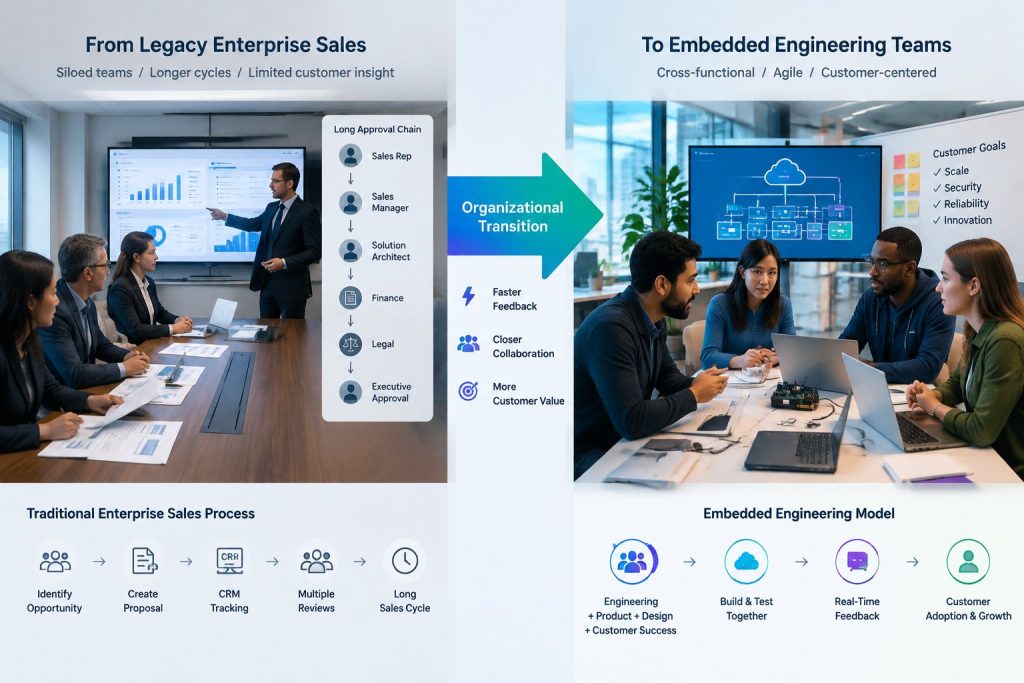
Unlike standard cost-cutting measures driven purely by economic headwinds, this round hits specific divisions while investments scale up elsewhere.
The changes heavily affect Microsoft’s Commercial Business and Xbox organizations. In tandem with the cuts, Microsoft unveiled its Frontier Company initiative—a $2.5 billion commitment aimed at embedding roughly 6,000 engineering and industry experts directly inside enterprise customer teams to co-develop custom AI systems.
This high-touch, deployment-focused model requires a different workforce profile than traditional software sales. It coincides with broader structural adjustments across Microsoft’s senior leadership, including the unification of consumer and commercial Copilot operations and a simplified two-segment reporting model focused on Agents & Infra alongside Devices & Consumer.
// Conceptual Resource Reallocation Ratio
Legacy Enterprise Sales  ==>  [-4,800 Roles]
Embedded AI Engineering  ==>  [+$2.5B Investment / 6,000 Experts]
Broader Industry Trends: Why Now?
Microsoft isn’t acting in a vacuum. Tech companies across Silicon Valley and the Pacific Northwest are recalibrating after years of rapid expansion. Spending tens of billions on AI datacenters and custom silicon requires extreme discipline across secondary units.
-
Capital reallocation: Dollars are migrating straight from mature sales channels to GPU clusters, infrastructure, and frontier model development.
-
Buyouts over layoffs: Microsoft previously offered voluntary buyouts to eligible U.S. staff, with nearly 30% of eligible employees taking early retirement packages.
-
Targeted hiring: Even amid cuts, university hiring and intern conversions remain active in high-demand technical categories like security, data science, and systems engineering.
The Human Cost and Market Realities
Losing a job in tech today feels vastly different than it did three years ago. While the demand for engineers skilled in machine learning, cloud architecture, and cybersecurity remains high, mid-level roles in legacy operations face an increasingly tight market.
Microsoft’s Chief People Officer Amy Coleman emphasized in an official internal memo that affected workers receive financial severance, extended healthcare access, and outplacement support. Furthermore, internal transfer initiatives successfully redeployed over 4,000 employees into high-priority segments prior to these cuts.
What Lies Ahead for Microsoft?
As Microsoft streamlines its workforce, the clear objective is agility. By trimming management layers and consolidating product teams, the company aims to speed up deployment cycles for enterprise solutions.
Whether this aggressive pivot yields the expected ROI for Wall Street remains to be seen, but one thing is certain: the corporate playbook for the generative AI era is actively being rewritten in real time.
Related Stories
Building a Virtual Museum for Every Classic Operating System
Preserving computer history: Explore the interactive virtual museum archiving every classic OS from CP/M and AmigaOS to early…

10 Best Sword Cards in Magic: The Gathering (Ranked)
Equip your deck for victory. We rank the top 10 Sword artifact equipment cards in MTG for Commander,…

CursorBench 3.1 Guide: AI Code Editor Benchmarks & Tests
Discover CursorBench 3.1, the new benchmark suite evaluating AI code editors. Explore test metrics, context retention scores, and…