

In the world of software engineering there are not books that can connect the dots between complex math and real-world programming as well as the book On the Calculation of Volume. For developers and engineers who want to know more about how we create spaces inside a computer this book is a tough but rewarding read that takes you on a journey into the world of computational geometry.
The Main Idea
The book is basically about the problems we face when we try to show 3D objects on a computer. It is not like drawing a picture or moving a shape around. To show objects we need to understand how to divide space into smaller parts. The author says that often we just try to make things look good but we do not really think about the math behind it which’s important for making accurate simulations and analyses.
Making Theory and Practice Work Together
One of the best things about this book is that it does not just talk about theory. While it goes into the math we need to understand how to calculate volumes it also talks about the limits of computers. Readers will find that the ideas in the book help them build more reliable programs for working with 3D objects. On the Calculation of Volume helps us connect the dots between what we learn in school and what we do at work.
How Algorithms Work
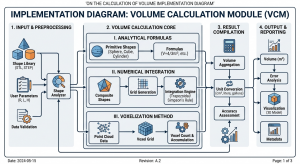
To understand how this works we need to look at how we process 3D blocks or meshes. The book says that usually we just add things up but in life we need to be smarter about how we sample space. By using techniques like grids or trees we can make our programs run faster without losing accuracy. Let us look at an example of how to calculate the volume of a 3D block:
def calculate_voxel_volume(voxels, resolution):
    count = 0
    for v in voxels:
        if v.is_active:
            count += 1
    return count * (resolution ** 3)
This is a basic example but On the Calculation of Volume makes us think about how different densities can change the result, which is important for things like medical imaging or mechanical simulations.
Putting It All Into Practice
When we try to put these ideas into our code we need to be careful about how we manage memory and keep things running smoothly. The author says that the problem is not usually the math itself but how we get the data. By making sure our computer gets the data it needs quickly we can make our programs run much faster.
Common Problems We Face
A big part of the book talks about how small mistakes can add up. When we work with shapes tiny errors can make a big difference like making a solid object look hollow. To fix this we need to be careful about how we compare numbers taking into account how computers really work. Here is a simple way to check if a number is close to zero:
def is_near_zero(value, epsilon=1e-9):
    return abs(value) < epsilon
What the Future Holds
Looking ahead the ideas in On the Calculation of Volume are becoming more and more important for things like design and digital models. As we move towards systems that can check the properties of objects on their own this book becomes essential reading. The use of geometry, in everyday programming tools will only get bigger in the coming years.
My Final Thought
On the Calculation of Volume is not an easy read. It needs you to know some math and be willing to learn about the details of computers.. If you put in the time you will be able to tackle tough geometry problems much better. It connects the world of ideas to the world of programming making it a must-have for any developer who works with math and high-performance computing. Whether you are building something from scratch or making an existing simulation better this book will help you make decisions for years to come. By going beyond looking at the surface we can really understand the space our software works in and this book is a great place to start that journey.
Written by
FutureTechSpot Editorial Team
Staff writer at Future Tech Spot. Covering the frontier of technology, artificial intelligence, and the digital future.
Related Stories
More from Tech
TCL 27R944K 165 Hz Gaming Monitor Review: Mini LED Excellence
Discover the TCL 27R944K, a powerful 4K 165 Hz gaming monitor featuring Mini LED technology for stunning brightness…

Exploring CursorBench 3.1: A Deep Dive into Its Features
Discover the latest updates in CursorBench 3.1, its real-world applications, and how it enhances performance and usability.

Intel’s Strategic Fab Roadmap: Key Locations and Deadlines
Explore Intel's fab roadmap, focusing on Arizona, Ohio, Ireland, and the critical deadlines shaping the 14A process node.