
The world of cybersecurity is changing very quickly. For a time security teams thought they had a lot of time. Sometimes months or even a year. Between finding a problem in software and bad people using it. Now that time has almost disappeared. There’s an idea called the Zero-Day Clock that shows how fast things are changing: Artificial Intelligence is making the safe period go from hundreds of days to just one day and it might even get down to one minute.
The Erosion of Defense Timelines
In the past when a new problem was found in software that nobody knew about it took skilled hackers a lot of time to make it a real threat. They had to look at complex code find patterns and create working code to exploit it. This process was like a protection that gave vendors time to fix and test security updates.
AI has changed all of this. It can now find problems through learning and code analysis allowing bad actors to find and use flaws much faster. What used to take weeks can now be done by computers running automatically.
Automation as a Catalyst for Cyber Threats
The increase in speed is huge. Large AI models and custom machine learning are being used to look at millions of lines of code for security mistakes. This makes it possible for more people to carry out attacks, not just skilled hackers.
When software development doesn’t use AI defensive testing at the same speed the gap gets bigger. Security teams are fighting a war where the enemy uses automation but defenders are still using traditional slower patching cycles.
The Mathematical Reality of the Zero-Day Clock
The Zero-Day Clock is a way to visualize this problem. By tracking the time between finding a vulnerability and it being exploited analysts have seen a downward trend. Many high-profile targets already have a one-day window and projections suggest it might get down to one minute. Where the exploit is used immediately after a patch or bug is found.
To understand how this works consider a simple example of automated vulnerability scanning:
# Example of automated vulnerability hunting
import ai_security_scanner

def scan_for_buffer_overflows(codebase):
    vulnerabilities = ai_security_scanner.analyze(codebase)

    for issue in vulnerabilities:
        if issue.severity == 'critical':
            exploit = ai_security_scanner.generate_exploit(issue)
            return exploit
    return None
Adapting to a Reality of Immediate Exploitation
So how do companies protect themselves when they no longer have weeks to wait for official updates? They must focus on resilience, not just reactive patching. This means using Zero Trust architectures and AI-driven threat detection that works in time. Companies can’t rely on perimeter defenses; they must assume an exploit is active and focus on containing it.
Preparing for the One-Minute Future
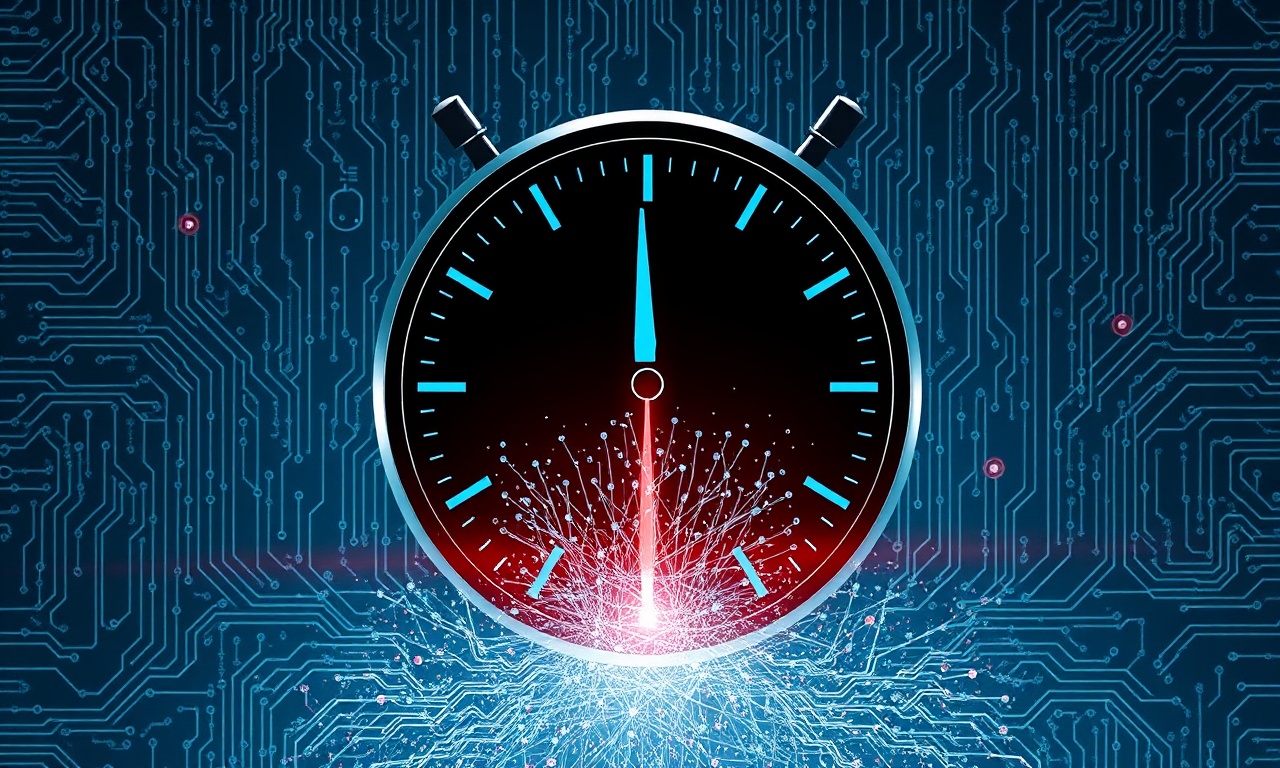
As we move toward a future where security windows are measured in seconds human analysts in security operations centers will mainly oversee AI agents that constantly test, patch and monitor infrastructure. If attacks happen in minutes defenses must work in milliseconds. Technologies like automated self-healing software will become essential.
The collapse of the zero-day window is a wake-up call for the software ecosystem. Relying on maintenance cycles is no longer an option. The future of security belongs to those who integrate intelligence and automation into their operations making their defense as swift, as the attack.
Written by
FutureTechSpot Editorial Team
Staff writer at Future Tech Spot. Covering the frontier of technology, artificial intelligence, and the digital future.
Related Stories
More from AI & Privacy

Global Crackdown on AudiA6 Ransomware Crypto-Laundering Network
Authorities worldwide dismantle AudiA6, a ransomware crypto-laundering service, disrupting cybercrime operations and seizing assets.
Critical Windows Server Flaw Allows Privilege Escalation via Malformed Packets
A severe Windows Server vulnerability enables attackers to gain system privileges using malformed packets. Domain controllers are actively…

Sam Altman Takes the Stand in Trial Against Elon Musk
Sam Altman testifies in a high-stakes trial involving Elon Musk and OpenAI. Explore the implications for AI and…