

The Growing Reality of Scaling Autonomous AI Agents
The use of artificial intelligence in businesses is increasing rapidly. Companies are now focusing on the costs of using advanced automated agents. A recent analysis by Goldman Sachs says that the demand for tokens could increase by 24 times. This will be a challenge for companies like Microsoft and Uber. They are already dealing with the complexities of billing models.
These companies need to pay for the computing power used by Large Language Models (LLMs). The way they pay is through tokens. When humans interacted with these models token usage was predictable.. Now autonomous agents are being used. They perform tasks and interact with external systems.
This changes everything. Autonomous agents do not just answer a question; they verify information and re-prompt the model to refine their outputs. For businesses this means an increase in computing requirements. If a single customer support agent query required one interaction before an autonomous agent might perform dozens of reasoning cycles to resolve that same issue.
The Token Economy and Operational Inflation
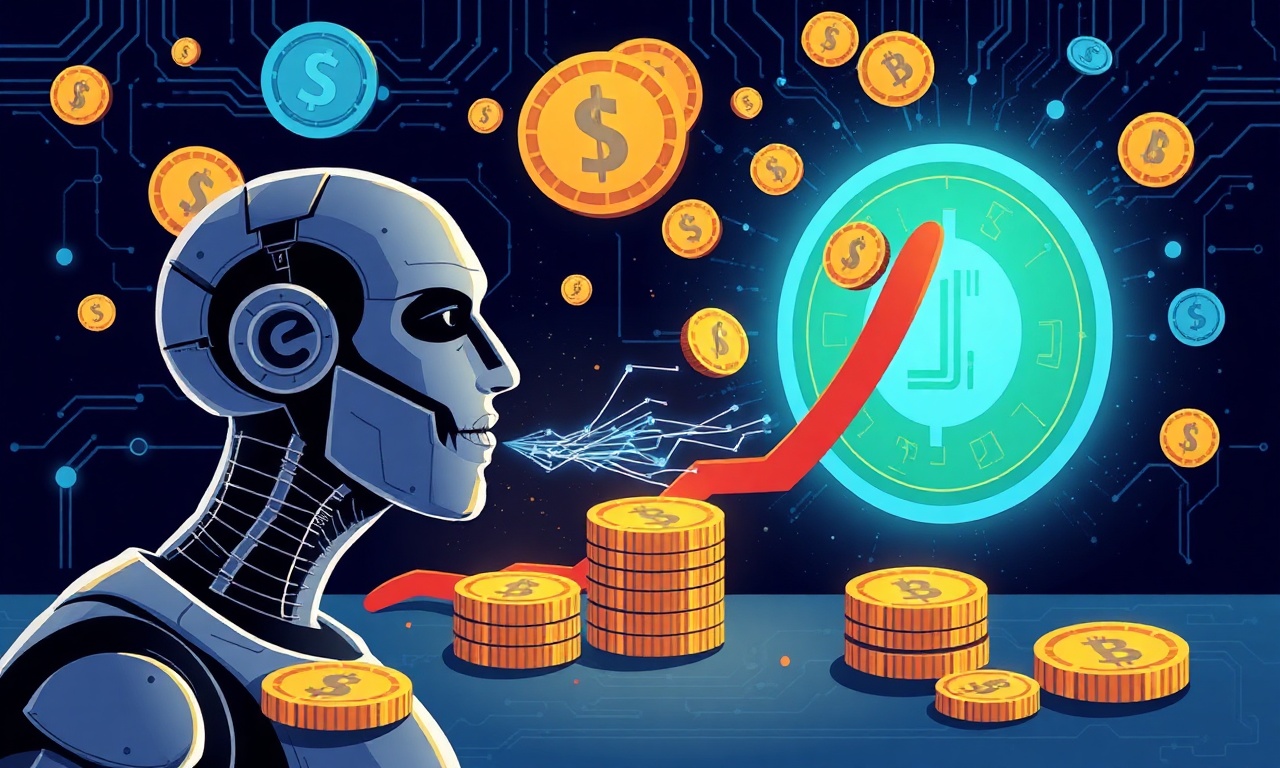
Financial analysts are starting to factor these costs into their models for tech companies. They note that the return on investment for AI is becoming harder to quantify as token consumption increases. Major players like Microsoft and Uber are aware of these challenges. Microsoft must provide the scale required for agentic workflows while managing the margin compression that follows heavy compute usage.
Uber’s reliance on automated decision-making and route optimization makes it an early case study for how agents can enhance efficiency while straining operational budgets. The billing structures provided by AI infrastructure vendors are often unclear. As companies scale they find that traditional cloud contracts do not map cleanly onto the fluctuating and often explosive nature of usage.
Enterprise Perspectives on Growing AI Expenses
Companies are looking for ways to manage these costs. They are exploring alternatives to raw token consumption. By optimizing engineering and utilizing caching mechanisms developers can reduce the number of tokens required for repetitive tasks. For example developers can implement a caching layer to prevent unnecessary repeat requests.
# Python-based logic for LLM request optimization
cache = {}

def get_optimized_response(query):
    # Check if a semantically similar query was already processed
    if query in cache:
        return cache[query]

    # Otherwise execute expensive API call
    response = call_ai_agent(query)
    cache[query] = response
    return response

# By implementing caching you avoid the
# redundant 24x token usage for standard tasks.
Mitigating the Financial Impact of High-Volume Tokenization
Many organizations are shifting toward “model distillation.” This means using less expensive models for specific tasks. This tiered approach allows companies to reserve the potent (and expensive) models for high-value reasoning while utilizing lightweight models for routine processing.
The Road Ahead: Balancing Innovation and Profitability
The warning issued by financial experts regarding a 24-fold increase in token demand is a necessary reality check. The next phase of the AI revolution will be defined by cost-efficiency than sheer capability. Companies must adapt to this fiscal reality to ensure long-term viability in an increasingly agent-driven future.
Ultimately the challenge of tokenized billing is a reminder that computing power is not a limitless utility. Autonomous agents hold the promise of transforming productivity across every sector.. The transition requires a more nuanced approach, to resource management.
Written by
FutureTechSpot Editorial Team
Staff writer at Future Tech Spot. Covering the frontier of technology, artificial intelligence, and the digital future.
Related Stories
More from AI & Privacy

AI Accelerates Zero-Day Exploits: The End of the Security Window
The Zero-Day Clock reveals how AI is shrinking the time between vulnerability discovery and weaponization, pushing the security…

Gotham Sequel Antagonist Mirrors Modern Digital Security Risks
Fresh reports on the next Gotham blockbuster hint at a tech-centric adversary, highlighting real-world concerns regarding digital privacy,…

China’s LineShine Takes Top Supercomputing Spot via CPU Power
China’s LineShine supercomputer claims the top spot in the Top 500, marking the first time a CPU-only machine…