
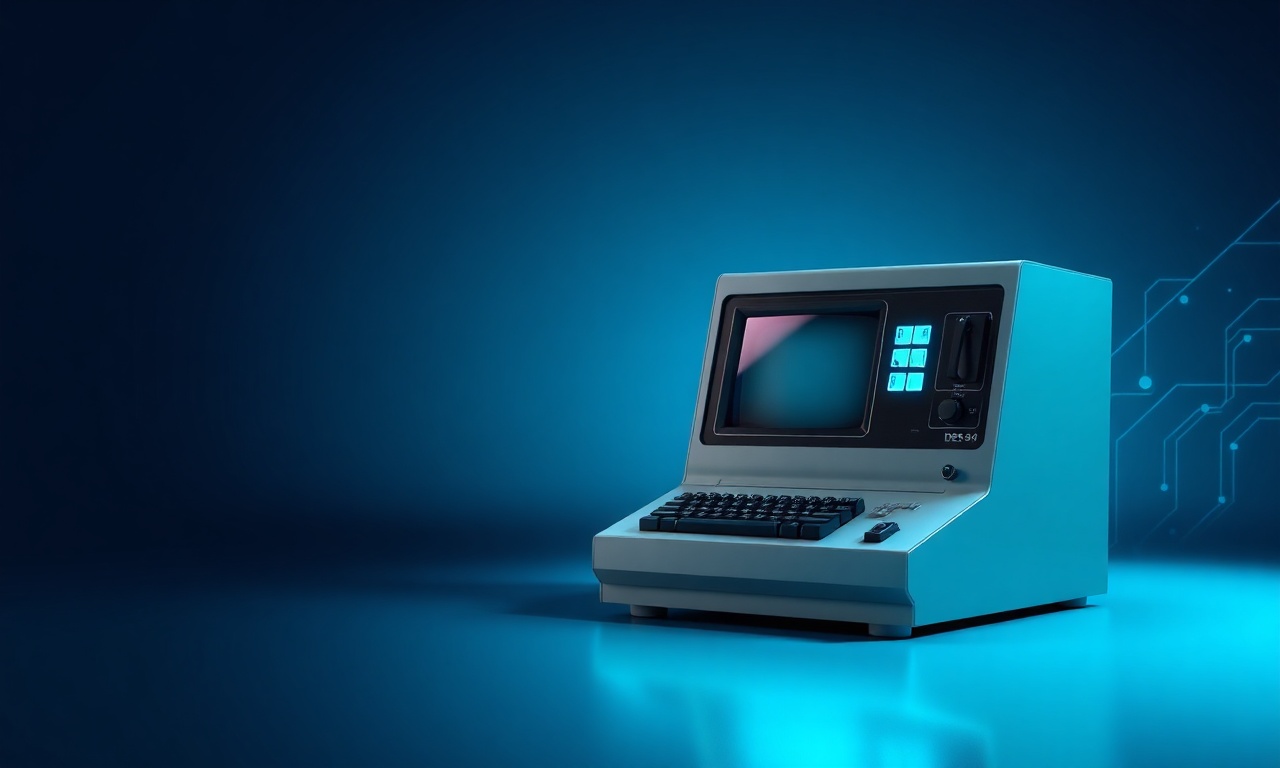
Rediscovering the Digital Equipment Corporation Legacy
The Digital Equipment Corporation PDP-8 family has left a mark on the history of computers. The original machines were very important in starting minicomputing. The later machines, like the DECmate II are a link between the strong industrial machines of the 1960s and the personal computer revolution of the 1980s. The DECmate II is often overlooked,. It is still very interesting to people who like old computers and computer history.
The DECmate II was made for a specific group of people: office workers who needed special word processing tools. It was not meant to be a computer like the VAX systems or a fun computer like the Commodore or Apple machines. It was a tool made to do one thing very well. It showed that the old 12-bit instruction set could still be very useful even when many people thought it was outdated.
The DECmate II has a 6120 microprocessor, which is a special version of the PDP-8. This chip is very good at what it does. Even when other companies were making 16-bit and 32-bit computers the DECmate II proved that 12-bit processing was good enough for office tasks like word processing and spreadsheets. The computer was designed to be simple and efficient like a made tool.
The DECmate II was different from other computers of its time. It did not need a lot of hardware to work. This simplicity was its feature making it a great machine for running the WPS-8 word processing software. Using a DECmate II is a reminder that old computers were often better at what they did than computers are.
Hardware Challenges and Modern Preservation
Fixing a DECmate II today is not easy. The special hardware, like the storage interfaces and video controllers can be very hard to work with. Collectors often have trouble with the RX50 floppy drives, which were always a bit temperamental. The special keyboard layout is also hard to connect to computers.
But the people who like these machines are very dedicated. They use hardware emulators or custom-built disk controllers to get the machines working again. They use technical documents to fix the power supply units and restore the monitor circuitry. It is a lot of work. It is worth it to keep these old computers running.
The Implementation Architecture
To understand how the DECmate II works you need to look at its bus structure and how it handles input/output. The machine uses a bus architecture to talk to its floppy drives and display buffer. Here is a simple example of how the machine might handle data in a loop:
/ Simple PDP-8 loop to output a character
LOOP   TAD CHAR    / Load character into accumulator
        TSF         / Skip if terminal flag is set
        JMP.-1     / Wait for
        TLS         / Load character to terminal
        HLT         / Halt for debugging
This example shows how simple and direct the PDP-8 instruction set is. The programmer works directly with the hardware flags without any layers. This is what makes the DECmate II so interesting to people who like computers and want to learn about the basics of computer science.
Legacy of the DECmate Concept
Why do we still care about the DECmate II? Because it represents a way of designing computers. The decision to take an architecture and update it for the modern office worker says a lot about how technology was changing in the 1980s. It was a bridge between the mainframes and the new personal computers.
The DECmate II is a reminder that “performance” is not always the same thing. The machine was very good at what it was designed to do. It could even beat some modern computers at certain tasks. By looking at the DECmate II we can learn more, about how computers were designed and how they evolved over time. It is still an important part of computer history and it remains the little PDP-8 that could.
Written by
FutureTechSpot Editorial Team
Staff writer at Future Tech Spot. Covering the frontier of technology, artificial intelligence, and the digital future.
Related Stories
More from Tech

DOE Energy Rebate Scheme Relaunched with Stringent Requirements
The DOE's restarted energy rebate program faces criticism over overly complex requirements that may be hindering its effectiveness…

Microsoft Announces Strategic Staffing Adjustments for 4,800 Roles
Microsoft is reducing its global staff by 4,800 positions. This move aims to align resources with AI and…
Disney’s live-action Moana can’t be as bad as its Lilo & Stitch remake
Okay, let’s talk about Disney’s live-action obsession. Specifically, the impending doom of the Lilo & Stitch remake. Honestly,…